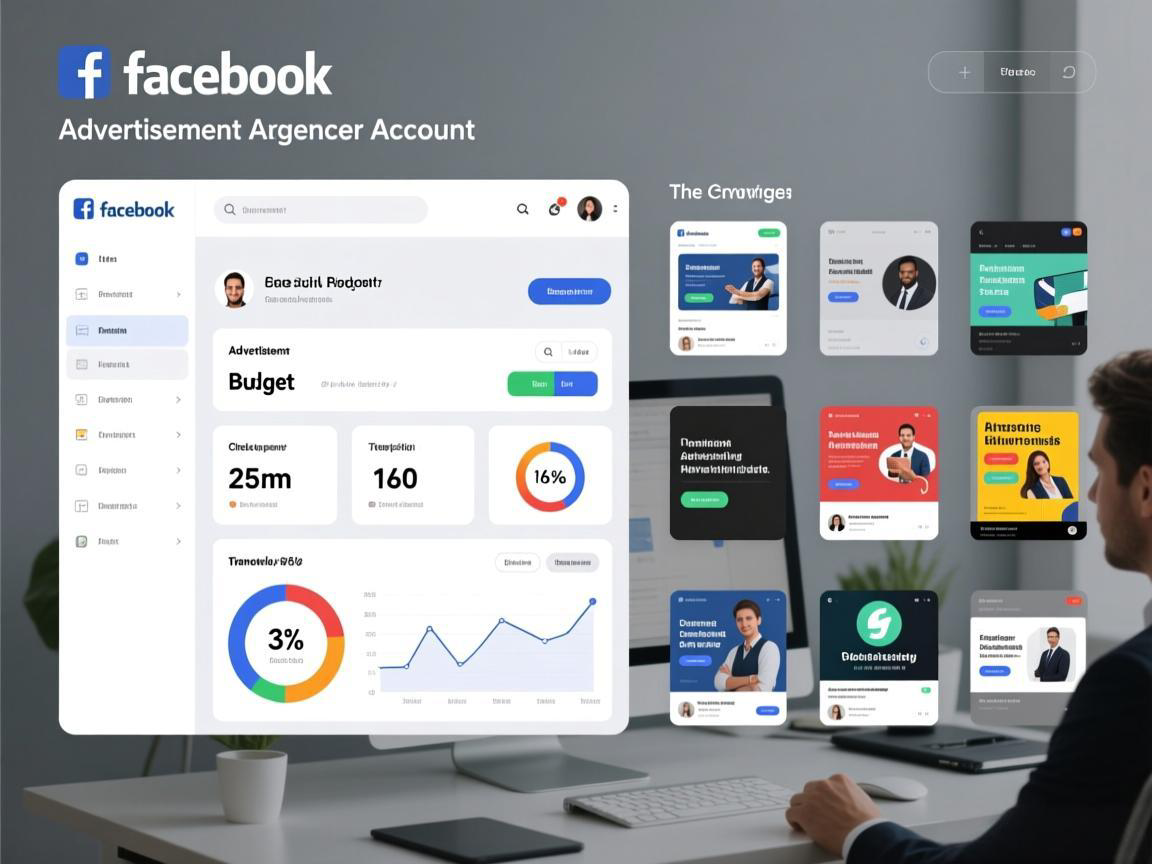


facebook ads manage
Managing Facebook Ads involves a lot, from initial setup to ongoing optimization. This guide will break it down into clear, actionable steps and best practices.
The 4 Pillars of Facebook Ads Management
Think of managing Facebook Ads as a continuous cycle with four key phases:
-
Strategy & Setup: Planning and creating your campaigns.
-
Launch & Monitor: Putting your ads live and watching the initial performance.
-
Analyze & Optimize: The most critical phase – using data to improve results.
-
Scale & Report: Growing successful campaigns and reporting on ROI.
Phase 1: Strategy & Setup
Before you even open Ads Manager, you need a plan.
1. Define Your Goal (The Campaign Objective)
What is the single most important thing you want to achieve?
-
Awareness: Brand awareness, reach.
-
Consideration: Traffic, engagement, app installs, video views, lead generation.
-
Conversion: Conversions (purchases, sign-ups), catalog sales, store traffic.
2. Know Your Audience
Who are you trying to reach?
-
Core Audiences: Target based on demographics, interests, and behaviors.
-
Example: Women, aged 25-40, interested in “yoga” and “Lululemon.”
-
-
Custom Audiences: Your most valuable audiences. Retarget people who already know you.
-
Examples: Website visitors, your email list, people who engaged with your Instagram.
-
-
Lookalike Audiences: Let Facebook find new people who are similar to your best existing customers (your Custom Audiences).
3. Craft Your Ad Creative & Copy
This is what stops the scroll.
-
Visuals: Use high-quality images or, even better, engaging videos.
-
Copy: Write clear, benefit-driven headlines and compelling ad text. Have a strong Call-to-Action (CTA) like “Shop Now,” “Learn More,” or “Sign Up.”
-
Format: Choose the right format for your goal (Single Image, Video, Carousel, Collection).
4. Set Your Budget & Schedule
-
Budget: Start with a daily budget you’re comfortable with for testing ($10-$20/day per ad set is a common starting point).
-
Schedule: Run your ads continuously or set a specific start and end date.
Phase 2: Launch & Monitor
Once your campaign is built, you launch it and begin active monitoring.
Key Tools: Meta Ads Manager
This is your command center. Get familiar with its layout:
-
Campaign Level: Manage your overall objectives and budgets.
-
Ad Set Level: Manage your audiences, placements, and budget.
-
Ad Level: Manage your individual creatives and copy.
What to Monitor in the First 24-72 Hours:
-
Spend: Is your budget being spent?
-
Frequency: How many times, on average, is each person seeing your ad? (Aim for <3 in the beginning).
-
CPM (Cost per 1,000 Impressions): How expensive is it to show your ad?
-
Relevance Score (now “Quality Ranking”): Is your ad resonating with the audience?
Phase 3: Analyze & Optimize (The Most Important Phase)
After your campaign has gathered enough data (usually 50+ conversions per week for a Conversion campaign), it’s time to optimize.
1. Analyze Performance by Key Metrics:
-
For Sales/Conversions: Focus on Cost Per Acquisition (CPA) or Return on Ad Spend (ROAS).
-
For Leads: Focus on Cost Per Lead (CPL).
-
For Traffic: Focus on Cost Per Click (CPC) and Link Click-Through Rate (CTR).
-
For Awareness: Focus on CPM and Reach.
2. The “Kill, Scale, Test” Framework:
-
Kill: Identify underperforming ad sets or ads (high cost, low conversions, high frequency) and turn them off. Don’t waste money.
-
Scale: Identify winning ad sets and ads (low cost, high conversions). Increase their budget gradually (e.g., by 15-20% every 2-3 days).
-
Test: Always be running A/B tests (Split Tests).
-
Test Audiences: Test a Lookalike 1% vs. a Lookalike 3%.
-
Test Creatives: Test a video ad vs. a carousel ad.
-
Test Copy: Test a short, punchy headline vs. a long, benefit-driven one.
-
Test Placements: Test Automatic Placements vs. manual placements (e.g., Feed vs. Stories).
-
Phase 4: Scale & Report
Scaling:
Once you find a profitable campaign, you can scale it by:
-
Increasing the budget of winning ad sets.
-
Expanding to new, similar audiences (e.g., create Lookalikes from different source audiences).
-
Duplicating successful campaigns and testing new angles.
Reporting:
Use the Ads Manager reporting columns to pull data for your key stakeholders or for your own analysis.
-
Use the “Performance” column for conversions and sales data.
-
Use the “Engagement” column for likes, comments, and shares.
-
Create custom reports to track exactly what you need.
Common Pitfalls to Avoid
-
Not Using the Pixel/Conversions API: This is non-negotiable. You must install the Meta Pixel (or use the Conversions API) on your website to track actions and build audiences.
-
Too Many Changes, Too Fast: Give the algorithm time to learn (at least 3-7 days) before making major changes.
-
Targeting Too Broad or Too Narrow: An audience of 5 million is likely too broad, while an audience of 10,000 is too narrow. Find a sweet spot (e.g., 500,000 to 2 million for a broad audience).
-
Ad Fatigue: If your Frequency is high and performance is dropping, your audience is tired of your ad. Refresh your creative regularly.
-
Ignoring Mobile: The vast majority of Facebook users are on mobile. Always preview how your ad looks on a phone.
Getting Started Checklist
-
Set up Meta Business Suite and Ads Manager.
-
Install the Meta Pixel on your website.
-
Define a clear goal for your first campaign.
-
Research and define your target audience.
-
Create at least 2-3 different ad creatives.
-
Set a testing budget.
-
Launch your campaign.
-
Schedule time to check performance daily for the first 3 days.
-
After 5-7 days, use the “Kill, Scale, Test” framework.
Managing Facebook Ads is an ongoing process of learning and refinement. Start small, focus on data, and don’t be afraid to test everything